How to Cut HDPE Sheet With Less Melting and Burr
Cut HDPE on a table saw, or with a circular saw run along a clamped guide, using a sharp carbide blade and a steady feed. Between two blades, the one with fewer teeth runs cooler. Cut curves with a router or a band saw. HDPE is far less likely to crack or chip than acrylic. What you are managing is heat and burr.
What makes HDPE different to cut?
HDPE (high-density polyethylene) is soft, tough, and slick. That changes the job in four ways.
- It is unlikely to crack. It takes a knock that would break a brittle sheet.
- It melts easily. A blade that rubs turns the chips to strings and welds them back into the cut.
- It is slippery. The sheet slides on the bench and under clamps more than you expect.
- It moves with temperature. Plastics grow and shrink as they warm and cool, and HDPE moves more than most.
The heat rule is the same as for every sheet plastic. Every tooth rubs as well as cuts, so more teeth mean more contact and more heat. HDPE sheet makers put it this way: the key is sharp tools and good chip removal, because heat builds to the point where the chips melt and fuse back together.
What you need
- Eye protection, for every cut
- Clamps with pads, and a flat, solid work surface
- A table saw, or a circular saw with a straightedge guide
- A sharp carbide blade
- For curves: a router with a sharp carbide bit, or a band saw
- A deburring tool or a sharp scraper for the edge
- A shop vacuum
Before any cut
- Clamp firmly, with pads. HDPE slides, and it also dents. Put scrap between the clamp and the sheet.
- Support the whole sheet. Thin HDPE sags. Support it on both sides of the cut.
- Check the blade is sharp. Sharp tooling cuts chips. Dull tooling makes heat.
- Think about temperature when fit matters. See "Allow for movement" below.
Which method suits which job?
| Method | Use it for | Watch for |
|---|---|---|
| Table saw | Straight cuts, any thickness | Long cuts can pinch the blade |
| Circular saw on a guide | Straight cuts in large pieces | Needs full support under the sheet |
| Router | Curves, shapes, and finished edges | Long chips wrap around the bit |
| Band saw | Curves and thick stock | Edge needs deburring |
| Scoring and snapping | Not recommended | It bends and stays bent |
| Jigsaw | Rough cuts only, if at all | The kerf welds shut |
| Laser | Not recommended | Melts; rough, beaded edge |
How do you cut HDPE with a table saw or circular saw?
Use a sharp carbide blade. HDPE sheet makers recommend carbide-tipped blades. One names a 50 to 70 tooth blade for a circular saw; the other gives tooth angles and no count. Within that, take the lower end: a blade with fewer teeth takes a real chip and throws it clear, and a fine blade rubs more than it cuts.
Cut a test piece first. That is the makers' advice before any run, and it tells you at once whether the blade and feed are right.
Feed at a steady, fairly brisk pace. You want distinct chips coming off the blade.
Read the cut. Chips mean the cut is cool. Strings, fuzz, or a glazed edge mean heat. Feed faster, or fit a sharper blade.
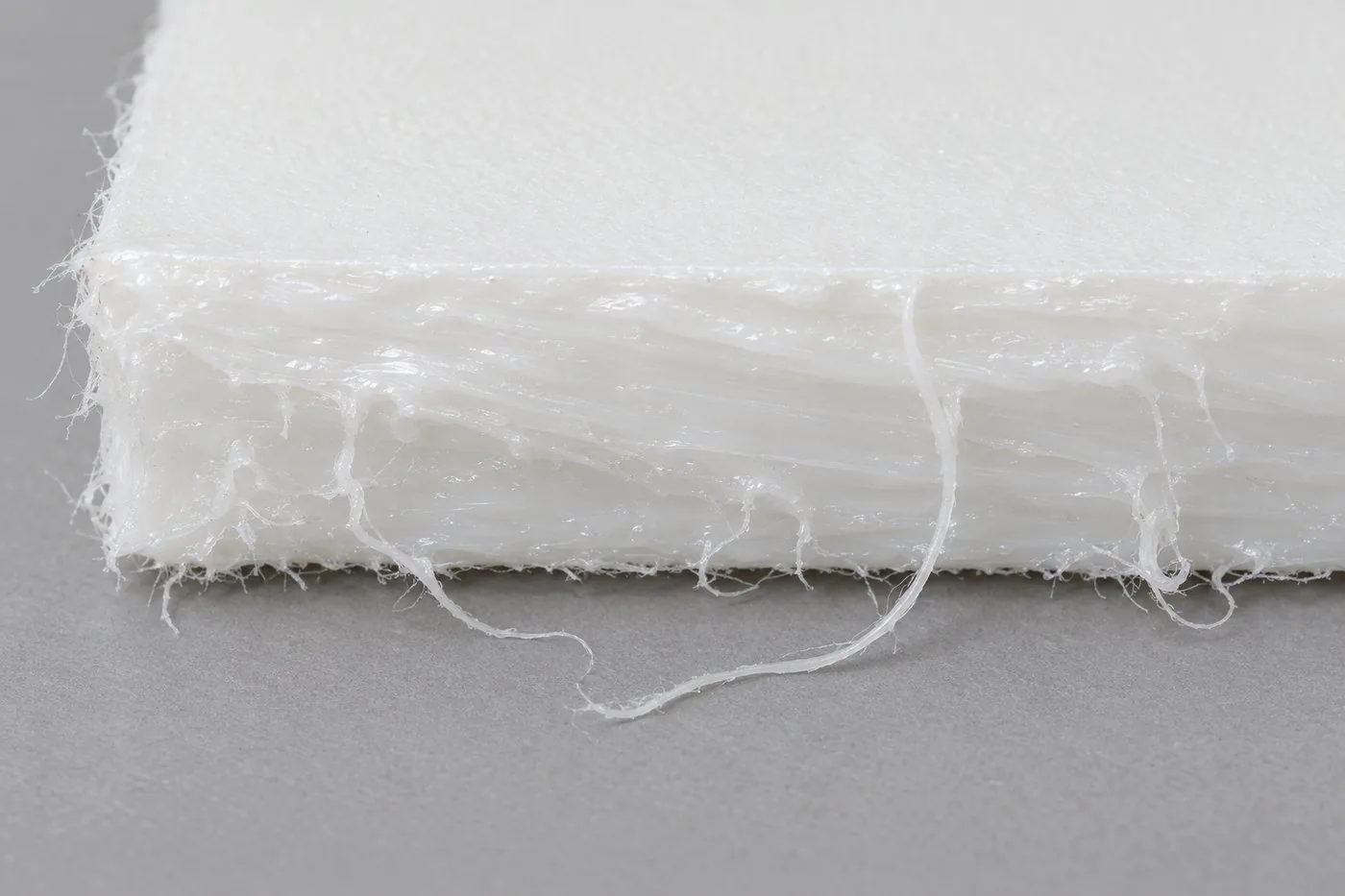
Do not stop in the cut. A spinning blade parked in the kerf melts the plastic around it.
On a table saw, use the riving knife or splitter. The sheet can close up behind the blade on a long cut and pinch it. Keep the sheet tight to the fence, and use a push stick, because HDPE slides easily under your hand.
With a circular saw, clamp a straightedge as a guide. Rest the sheet on a sacrificial backer board or a sheet of rigid foam, and set the blade to cut just into it.
How do you cut curves in HDPE?
Router
HDPE routs well, and a router is the best way to put a finished edge on it.
- Use a sharp carbide bit. Makers recommend two to four flutes, and an up-cut spiral bit to lift the chips out of the cut.
- Feed against the rotation of the bit, and keep moving.
- Stop now and then to clear the swarf. HDPE comes off in long ribbons that wrap around the bit.
- A round-over or chamfer bit leaves a comfortable edge in one pass.
- For repeat shapes, rough-cut close to the line and trim to a template with a flush-trim bit.
Band saw
A band saw suits curves and thick HDPE. It runs cooler than most saws, because each tooth spends most of its trip out of the cut. Makers' guidance is a hook-tooth blade with 4 to 8 teeth per inch, so the soft chips clear.
Can you cut HDPE with a jigsaw?
It works for rough curves. A jigsaw blade is short and stays buried in the cut, so heat builds and the kerf can weld shut behind it. HDPE sheet makers say to use a rough-cut blade ground for plastics, and that a smooth metal-cutting blade will not give an acceptable result. Cut outside the line, clamp close to the cut, and finish the edge with a router or a scraper.
Can you score and snap HDPE?
No. HDPE bends at a score and stays bent. Use a saw.
Can you laser cut HDPE?
It is not worth trying. A laser melts HDPE instead of cutting it, and the edge comes out rough, beaded, and out of square. Use a saw or a router.
How do you clean up a cut HDPE edge?
HDPE does not polish. Clean the edge up with a cutting tool:
- Deburr. Run a deburring tool or a sharp knife along each corner at a low angle. The burr peels off in a ribbon.
- Scrape. A sharp scraper takes saw marks off the edge.
- Rout. For the best-looking edge, run a round-over or chamfer bit along it.
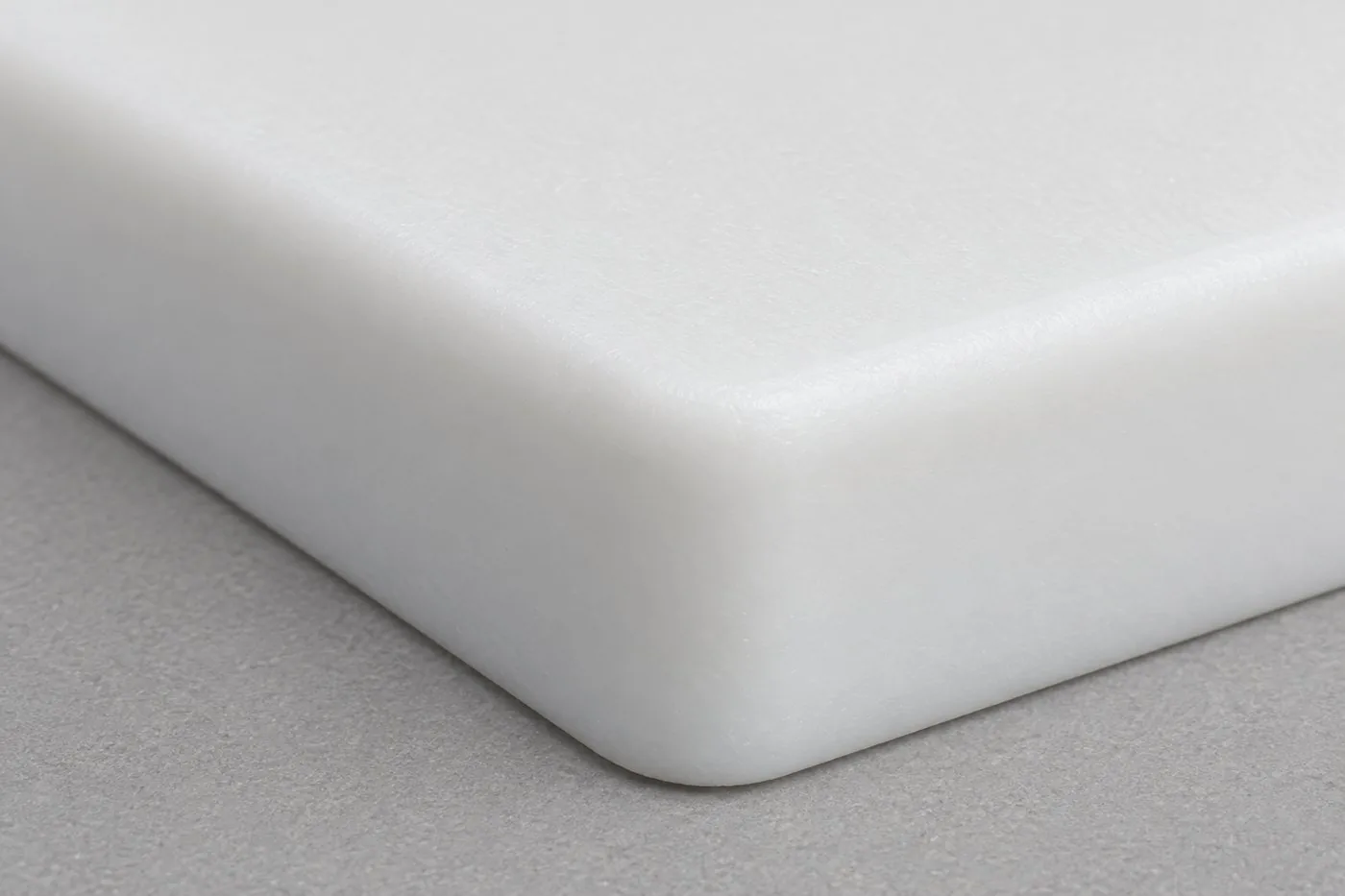
Sanding is possible, but only with very fine paper. Coarse paper leaves small scratches that hold dirt.
Keep flame and heat away from the edge.
Allow for movement
HDPE grows and shrinks with temperature, more than most sheet plastics. If a part has to fit a fixed opening, cut it at about the temperature it will be used at, and leave it a little room. If you fasten it down, makers' guides say to drill oversized holes or slots and use washers, so the sheet can move. On a small panel in a room that stays at one temperature, it matters much less.
HDPE cannot be glued. Plan on screws, bolts, or plastic welding.
Mistakes to avoid
- Using a fine-tooth or metal-cutting blade. It rubs, and the cut melts.
- Feeding too slowly, or stopping in the cut. Strings and a glazed edge mean heat.
- Under-clamping. The sheet slides. Clamp it, with pads.
- Trying to score and snap it. It folds.
- Cutting to a tight fit in a cold shop for a part that will sit in the sun.
- Planning a glued joint. Adhesives do not hold on HDPE.
Or have it cut for you
We cut HDPE to the size you enter, on a saw, with a square edge. Type your dimensions and the price shows as you type. Natural comes in thicknesses from 0.060" to 1", and white, black, and gray are UV-stabilized sheets. HDPE does not polish, so there is no edge-finish option. There is no minimum order.
For holes, notches, or curves, request a quote. We ship to the contiguous US. Pieces are cut to your dimensions, so check your measurements before you order. The details are on the returns page.
Related guides
FAQ
What is the best way to cut HDPE sheet?
A table saw, or a circular saw run along a clamped guide, with a sharp carbide blade, fed at a steady pace. Use a router or band saw for curves.
What saw blade should I use for HDPE?
A sharp carbide-tipped blade. One HDPE sheet maker names 50 to 70 teeth for a circular saw. Take the lower end where you have the choice: more teeth mean more rubbing and more heat, and HDPE melts easily.
Why does HDPE melt when I cut it?
Friction heat. The usual causes are a blade with too many teeth, a dull blade, a slow feed, or stopping in the cut. Use a sharp blade with fewer teeth and keep moving.
Can you cut HDPE with a jigsaw?
Yes, for rough curves. Use a rough-cut blade ground for plastics, not a smooth metal-cutting blade. Cut outside the line and finish the edge with a router or a scraper.
Can you laser cut HDPE?
It is not a laser material. A laser melts HDPE and leaves a rough, beaded edge. Cut it on a saw or with a router.
How do you smooth the edge of HDPE?
Deburr the corners with a deburring tool or a sharp knife, scrape the saw marks off, or run a router along the edge. Sanding needs very fine paper. HDPE does not polish.
Sources
HDPE sheet manufacturers' published fabrication guides.
- Vycom, HDPE fabrication guide (Seaboard, Designboard, Playboard). https://plaskolite.com/docs/default-source/fab/fab057_vyc_hdpe.pdf
- King Plastic Corporation, Working with King StarBoard. Published by King Plastic Corporation (kingplastic.com).