1/8" Bronze polycarbonate sheet
The warm tint — bronze glazing you can see through, with the glare and heat taken down.
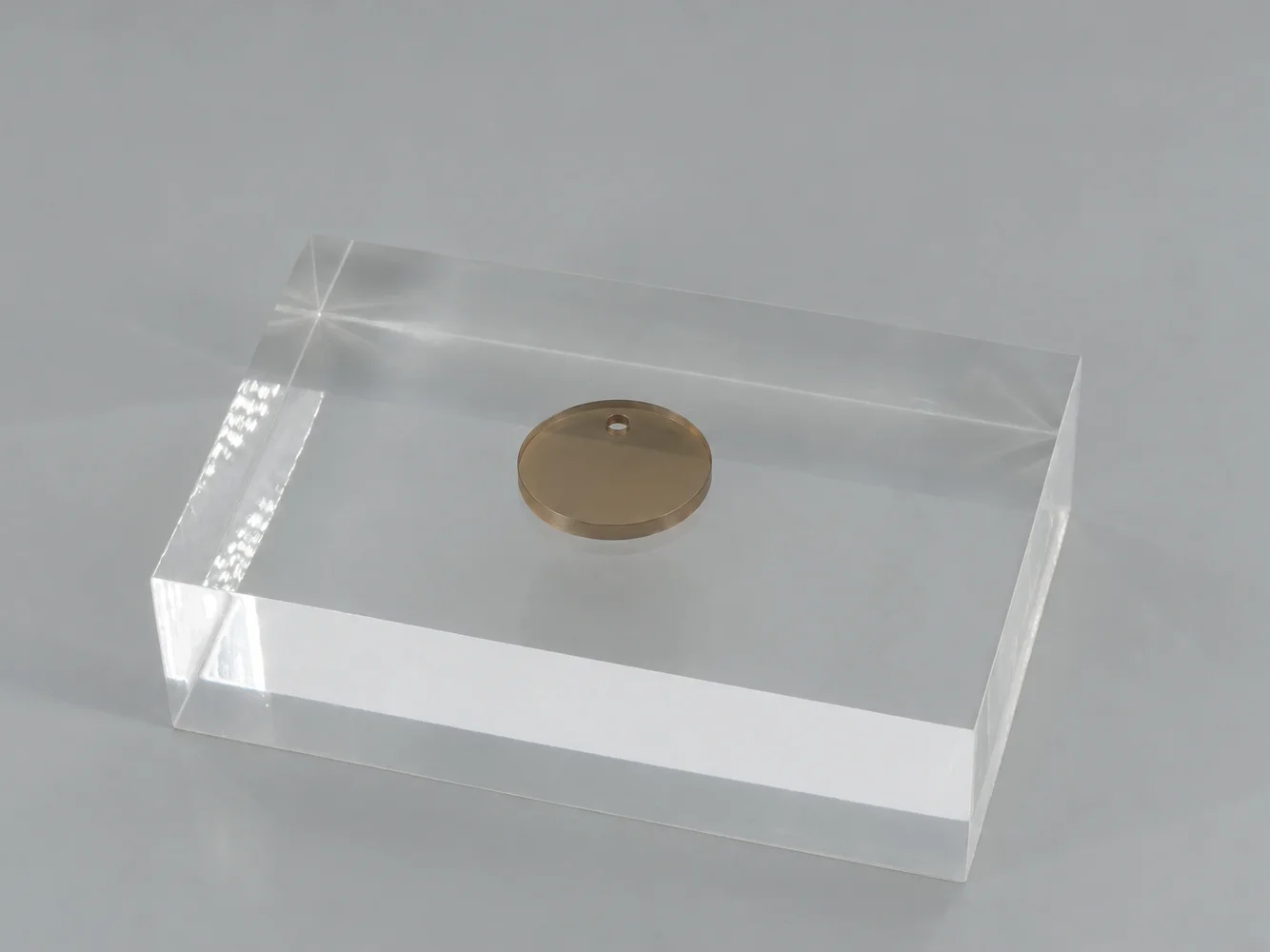
Bronze polycarbonate sheet, cut to your exact size from 12" to 48" per side. Pick a standard size or enter custom dimensions, add diamond-polished edges, and see the price instantly — no quote for straight cuts, no minimum order. Note: polycarbonate should not be laser cut.
- High impact strength — far tougher than acrylic
- Bronze tint runs through the sheet, not a surface film
- 3 thicknesses, 1/8"–1/4"
$5 for the first cut, $3 each additional, totaled across your line.
Need notches, holes, or curved cuts? Request a quote →
What bronze polycarbonate is for
Bronze polycarbonate is the warm-toned tint: a smoky brown-gold that runs through the sheet and reads like the bronze glass on an office building. It cuts transmitted light and solar heat the way gray does, but where gray is neutral, bronze warms whatever you see through it — which is why it is the tint chosen for sunrooms, patio and canopy covers, skylight glazing, and entry lites on buildings trimmed in brick, timber or bronze-anodized metal.
It is still polycarbonate underneath, so it goes where glass and acrylic cannot: overhead glazing that has to survive hail and dropped tools, walkway and carport covers, and any tinted panel that might take a knock. Bronze polycarbonate bends and absorbs an impact rather than shattering.
The tint is in the material rather than a film, so it does not scratch off or peel, and it does not change the sheet's impact resistance. Thickness works as it does for the other colors: thinner sheet for framed panels, heavier stock where the panel spans a distance or is expected to be hit.
Why 1/8" specifically
1/8" is the workhorse thickness and the one most people mean when they say Lexan. It is rigid enough to stand in a frame over a useful span, thin enough to cut and drill without special tooling, and it carries polycarbonate's whole reason for existing: it takes a hit that would put a crack straight through acrylic. Machine guarding, safety glazing, equipment windows, and covers that get knocked all land here.
Do not cut polycarbonate in a laser
Polycarbonate absorbs the beam instead of cutting cleanly: it scorches brown along every edge, melts and re-welds, gives off fumes you should not breathe, and can catch fire. It also coats the optics. This is true of every laser and every thickness — CO2 and diode alike, and it is not a settings problem.
Cut polycarbonate mechanically — saw, router or shears — or tell us the finished size and we will cut it for you. If the part is going in a laser, you want acrylic instead; the craft & laser range is set up for exactly that.
Questions
Can you see through bronze polycarbonate?
Yes — it is a tint, not a solid color, like bronze-tinted window glass. What is behind it stays visible, darker and warmer in tone, with the glare taken down. It is glazing, not a panel: if you need to hide what is behind it, black polycarbonate is the opaque option.
Bronze or gray tint?
They cut light and heat to about the same degree; the difference is the tone. Gray is neutral and leaves the colors behind it true, bronze warms them. Pick by what the panel sits next to — bronze alongside brick, timber and bronze-anodized frames, gray alongside aluminum, white and painted steel.
Is bronze Lexan the same as bronze polycarbonate?
Yes. Lexan is a brand name for polycarbonate sheet, so bronze Lexan and bronze polycarbonate describe the same tinted material.